

 Mold remediation
 Water damage drying
 Fire & smoke cleanup
 Storm response
 Sewage cleanup
 Reconstruction
Free visual inspection and a written scope of work before any mitigation begins - photos, moisture readings, and drying logs go in your claim file
The scope we write is the scope we bill. Anything new gets shown to you, in writing, before we touch it.
Get your free estimateFast, Reliable Mold Remediation Across College Point
Mold remediation in College Point typically runs $1,800 – $6,500 depending on how far the growth has spread and whether the water source is still active. Most jobs in the neighborhood take two to five days, including containment, removal, drying, and clearance testing. If you’re seeing black spots on baseboards, smelling musty air in a cellar, or dealing with recurring dampness near 14th Avenue or 23rd Avenue, call us at (315) 924-6992. A live person answers, day or night. We’ll give you a written price before any tool is touched, and we won’t change that number at your door.
Why Dryden Restoration New York Is College Point’s Preferred Mold Remediation Company
We’ve been in the restoration trade since 2005, and College Point’s specific problems show up on our boards more often than most. This is a waterfront neighborhood. Flushing Bay sits to the north, the East River runs along the southern edge, and the water table sits high almost everywhere in between. That means basements here don’t just get wet, they stay wet. And wet in College Point usually means mold within 48 to 72 hours if the drying isn’t done right.
Carl Brandt, who leads our crews, has spent years working the mix of pre-war brick row houses and post-war frame homes that define this neighborhood. Our technicians are background-checked, uniformed, and trained to IICRC, RIA, and IFA standards. But the thing that actually matters to a homeowner on 119th Street or along Powell’s Cove is that we know what’s behind those original plaster and lath walls, because we’ve opened enough of them to know exactly where moisture hides.
Every job follows the same Kingswell Way principles: say the price before the work, show up in the window we gave, leave the place cleaner than we found it, put the guarantee in writing, and come back if it fails. That last part isn’t a slogan. It’s the 365-Day Done Right Promise, written into every contract.
When you call about a mold problem in College Point, we dispatch from our New York City office and crews reach most addresses in the neighborhood within 60 to 90 minutes for emergency water stops.
Restoration work we handle
Mold Remediation Services in College Point
Mold Remediation Services in College Point start with identifying the water source that fed the growth in the first place, then isolating the affected area with negative air containment, removing contaminated materials, sanding and treating structural wood, and drying the space to an RH (relative humidity, the amount of moisture in the air) below 50%. In pre-war homes, this almost always involves dealing with original plaster and lath rather than modern drywall, which changes both the removal technique and the drying time.
Mold Inspection & Testing
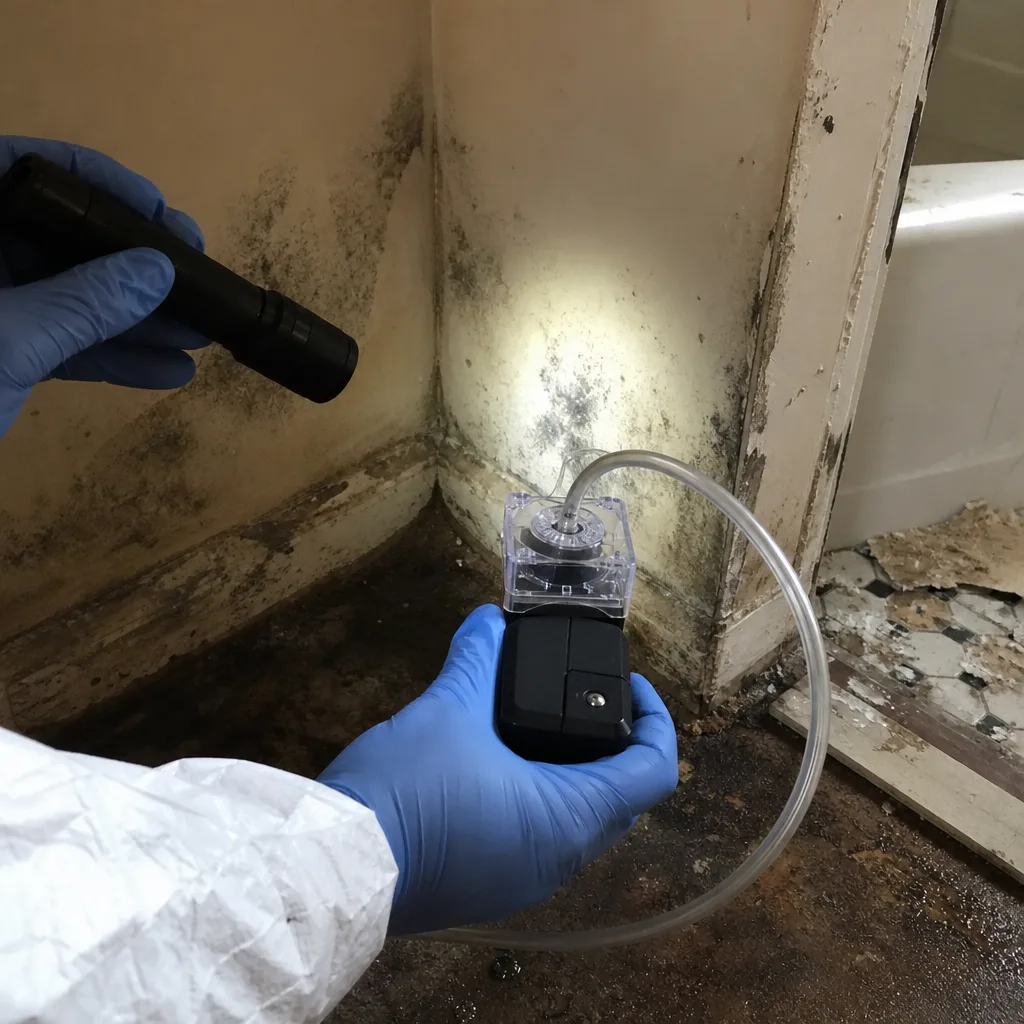
Before we remove anything, we map the moisture. In College Point row houses, mold routinely hides behind baseboards and inside wall cavities where the plaster keys have failed. We use invasive probes when the readings suggest a pocket that no surface meter can see. Air sampling and surface swabs tell us what species we’re dealing with, which matters for clearance after the job is done. A full inspection with lab results here runs $350 – $700.
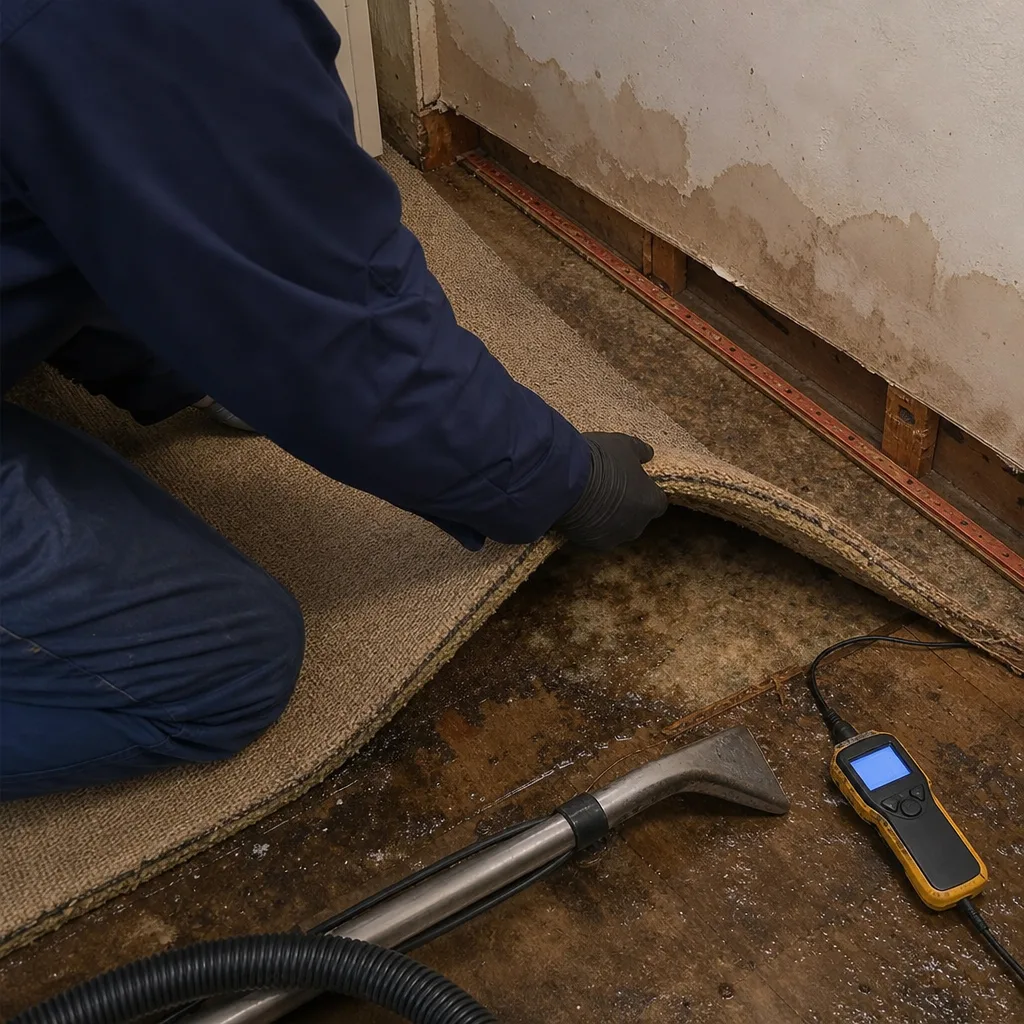
Black Mold Remediation
The black stuff that worries homeowners is usually Stachybotrys chartarum, and in College Point it tends to appear on cellulose-heavy materials like old lath, paper-faced drywall, and cardboard boxes stored in damp cellars. This isn’t a bleach-and-paint situation. We contain the room under negative air, remove the affected material, HEPA-vacuum every surface, and treat the framing before it’s sealed. Black mold removal in a typical College Point cellar runs $2,500 – $6,000 depending on square footage and whether the ceiling framing is involved.
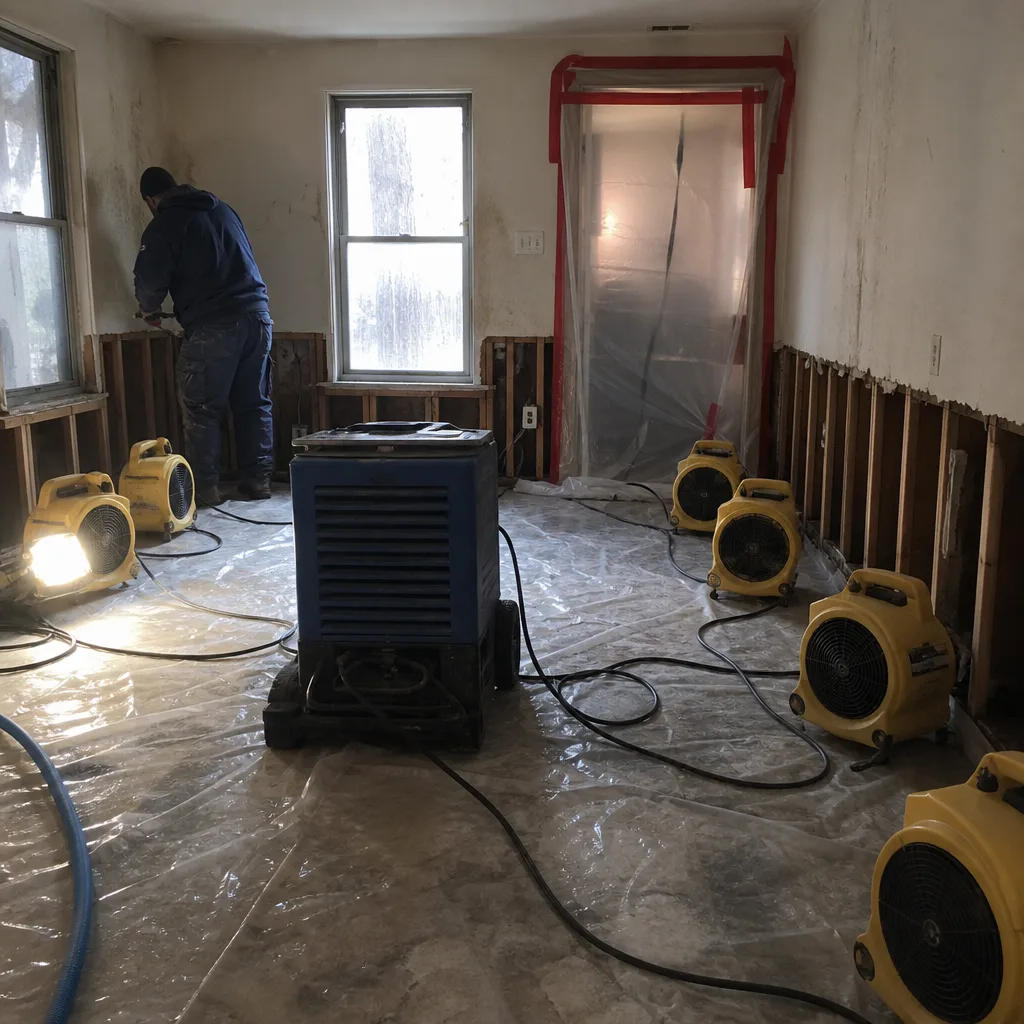
Crawl Space Treatment
Some older College Point homes have shallow crawl spaces with dirt floors that wick moisture straight up into the joists. We’ll seal the ground with a vapor barrier, treat any fungal growth on the wood, and set up drying equipment sized for the space. Crawl space mold treatment here typically runs $1,500 – $4,000.
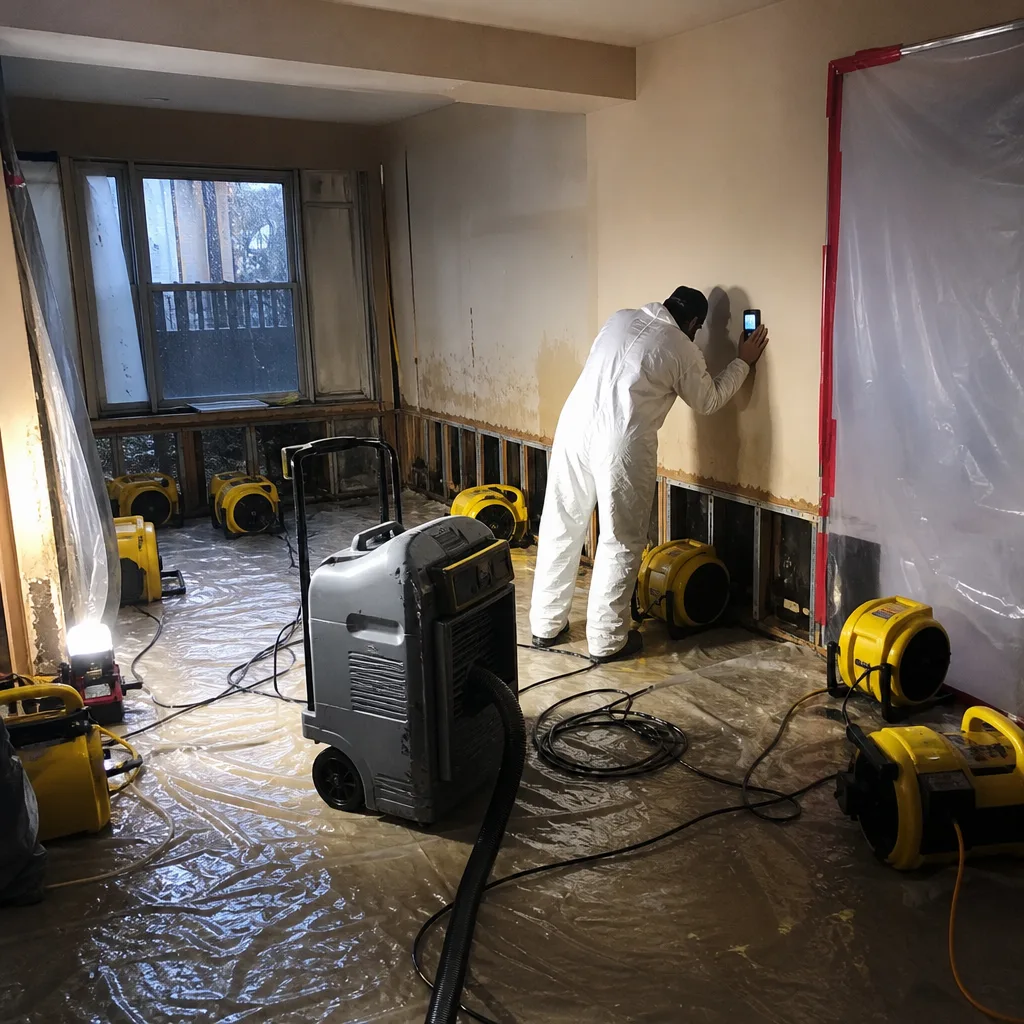
Moisture & Humidity Control
After remediation, the cellar or crawl space needs a moisture management plan. That usually means a dehumidifier rated for the cubic footage, improved drainage at the bulkhead or bilco door, and often a sump pump upgrade for high-water-table lots. Humidity control recommendations are part of every job, not an upsell.
What happens when you call
- 1
A real person answersNo phone trees - you reach a local pro.
- 2
You get an upfront price rangeHonest numbers before anyone is dispatched.
- 3
A background-checked tech heads outLicensed & insured, dispatched right away.
- 4
You approve before work beginsNothing starts until you say go.
Professional Mold Removal in College Point
Professional Mold Removal in College Point is different from the DIY approach because we establish containment before any demolition happens. Opening a moldy wall sends spores into the air, and in a tight row house, those spores travel through the joist bays into adjacent rooms and even the neighbor’s party wall. Our crews set negative air machines, seal registers and doorways, and work in full PPE until the affected materials are bagged and out of the house. For a visible patch on an exterior wall, removal alone might run $1,800 – $3,000. When the growth extends into a finished cellar with a suspended ceiling, expect $4,000 – $6,500.
Air Quality Restoration
After the removal and structural drying, we run HEPA air scrubbers for 24 to 48 hours to drop the spore count in the breathing zone. Then we do a second round of air sampling to confirm the count is back to normal background levels for College Point, which sits close enough to the water that baseline counts run slightly higher than inland Queens. Air quality restoration after a typical cellar job adds $500 – $1,200 to the total.
Containment and Structural Drying
In a 1920s brick row house on 23rd Avenue, the original lath and plaster acts like a sponge when a nor’easter pushes water over the bulkhead. We can’t just set air movers and leave. We remove the soaked material to the 4-foot line, drill the sill plates for directed airflow, and run Injectidry panels to pull water out of the lower wall cavities. The goal is structural wood under 15% moisture readings before any antimicrobial is applied.
Trusted Brands We Service in College Point
Our equipment fleet includes Dri-Eaz and Phoenix dehumidifiers, XPOWER and B-Air air movers, and Injectidry systems for hard-to-reach wall and ceiling cavities. These are the same professional-grade machines used by large commercial restoration crews, and they matter because a homeowner-grade box fan from the hardware store will never get pre-war plaster dry enough to prevent regrowth. We follow IICRC and RIA standards on every job, and we explain what each machine is doing and why, in plain English, before we leave you alone with it. If you need a Mold Remediation team that uses commercial equipment and documents its readings, we’re the ones to call.
Common Mold Remediation Problems We See in College Point Homes
- Hidden growth behind original plaster and lath. Pre-war row houses in College Point often show a small stain on the surface while the real colony sits between the plaster and the brick. Invasive probe readings catch what a visual inspection misses.
- Cast-iron waste lines cracking under the slab. Original drainage pipes from the 1920s and 1930s flex and crack as the soil shifts. During heavy rain, that crack becomes a sewage entry point, and Category 2 or Category 3 water feeds mold in the wall cavities.
- Condensation in suspended-ceiling plenums. A finished cellar with a drop ceiling traps moisture above the tiles while the room below feels dry. We’ve seen joists re-wet within days of a completed drying job because the plenum was never opened.
- High water table keeping slabs damp. College Point sits low, and groundwater pressure pushes moisture up through unsealed concrete. A cellar can test dry on the surface and still carry 80% relative humidity at the wall base, which is enough to support fungal growth year-round.
See the difference
 Before
 After
After Before
 After
After Before
 After
AfterPricing for Mold Remediation in College Point, NY
Here’s what College Point homeowners can expect to pay. A small visible patch on drywall or plaster, with containment and removal: $1,800 – $3,000. A full finished cellar with mold behind the walls and a suspended ceiling: $4,000 – $6,500. A crawl space with fungal growth on joists and a dirt floor: $1,500 – $4,000. Air quality restoration and clearance testing: $500 – $1,200. What moves the number is square footage, whether the water source is still active, and how much of the original plaster or lath has to come out. Written price before work starts. Free estimate by phone at (315) 924-6992.
We Also Serve Cities Near College Point
Our crews cover Mold Remediation in College Point and the surrounding neighborhoods, including Jackson Heights, Maspeth, and New York. If you’re a few blocks over the border, the same written pricing and 365-day guarantee applies. Call us and we’ll tell you honestly whether you’re in our regular response zone.
Serving College Point, NY - Our Local Coverage Area
We’re based in the College Point area and know this community well. Use the map below to see our service coverage - if you’re nearby, we can almost certainly help.
FAQs About Mold Remediation in College Point
Bleach kills surface mold but doesn’t reach the spores living inside the wall cavity, and it does nothing to stop the moisture that feeds the growth. In College Point, that moisture is usually coming from a failed cast-iron waste pipe, a high water table, or coastal storm water pushing through the foundation. Mold keeps returning because the water source is still active. Proper remediation removes the affected material, dries the structure below 15% moisture content, and fixes or mitigates the water source first. Call (315) 924-6992 and we’ll trace the moisture before we remove anything.
Within 24 to 48 hours, before the fungal growth enters its rapid colonization phase. In a pre-war brick row house, the lath and plaster will hold water against the brick for days, even after the standing water is gone, which means the clock starts when the water recedes, not when it first appeared. Our crews can be on 14th Avenue within 60 to 90 minutes of your call, set up extraction and drying, and stop the mold cycle before it takes hold.
Sometimes. If the plaster is sound and the moisture reading at the base is below the threshold, we can use Injectidry panels to pull water from wall cavities through small drilled holes, which preserves the original plaster. But if the plaster has separated from the lath or the growth is behind the wall, those sections have to come out. We look at this on a wall-by-wall basis. You’ll know exactly what has to be removed and what can be saved before any demo starts.
It includes source identification, isolation of the work area under negative air containment, removal of affected porous materials, HEPA vacuuming of all surfaces, antimicrobial treatment of structural wood, structural drying to under 15% moisture content, and post-remediation clearance testing. The IICRC standard is the S520, and it’s the benchmark we work to because it dictates the actual procedures, not just the outcome. A typical College Point cellar job following S520 takes two to five days.
It’s both. The backup is a plumbing issue caused by an undersized or failing drain line, often the original cast-iron pipe that’s been corroding for decades. The mold risk comes from what the backup leaves behind, because sewage is Category 3 water and every surface it touches has to be removed or sanitized to IICRC standards. If you’re seeing water at the floor drain after heavy rain, call us before the next storm. We’ll dry it, treat it, and tell you if you need a plumber involved, in that order.
Contact Dryden Restoration New York
If you see mold, smell it, or just had water in a College Point cellar, don’t wait. Every day of delay gives the colony time to move through your joist bays and behind your plaster. Call (315) 924-6992 for a free estimate. A live person answers. You’ll get a written price before any work begins, and a 365-Day Done Right Promise in writing when the job is finished.
Written by Carl Brandt, Owner at Dryden Restoration New York, serving College Point since 2005.