

 Mold remediation
 Water damage drying
 Fire & smoke cleanup
 Storm response
 Sewage cleanup
 Reconstruction
Free visual inspection and a written scope of work before any mitigation begins - photos, moisture readings, and drying logs go in your claim file
The scope we write is the scope we bill. Anything new gets shown to you, in writing, before we touch it.
Get your free estimateMold Remediation in Jackson Heights, NY: What It Costs and How It Works
Mold remediation in Jackson Heights typically costs between $1,800 and $6,500 for a contained, professional job in a standard co-op unit, with larger multi-room or inter-unit spread running $8,000 to $15,000. A visible mold inspection with moisture mapping in Jackson Heights runs $300 to $600, and same-week dispatch is available for active water-fed mold. Those are real numbers we give to homeowners before any tool comes out of the truck, and they hold from first visit to final invoice. If you’re dealing with damp smells, discolored walls, or a recent leak in a pre-war building, call (315) 924-6992 and we’ll give you a written scope and a dollar number.
Jackson Heights isn’t like other Queens neighborhoods when it comes to mold. The housing stock changes everything. Most homes within the Jackson Heights historic district are 1920s and 1930s co-ops with original plaster walls, wood joists, and plumbing that has outlived its intended service life by decades. Water travels through these buildings differently than it does in a stick-built suburban house, and mold follows that water. Our teams have worked the hallways, stairwells, and unit interiors of these buildings long enough to know what a board approval process looks like, which containment setups pass a building super’s inspection, and how to dry a shared wall cavity without opening the neighbor’s side.
Fast, Reliable Mold Remediation Across Jackson Heights
When a pipe lets go inside a Jackson Heights co-op, every hour of delay costs you wallboard, plaster, and clean air. We dispatch local crews to Jackson Heights the same day you call, with a named arrival window before your tech leaves the shop. Our Mold Remediation crews carry Dri-Eaz air movers, XPOWER axial fans, Injectidry injection drying mats, and B-Air dehumidifiers, plus the containment materials needed for tight pre-war hallways and stairwells. Carl Brandt oversees the team, and every tech who shows up at your co-op is background-checked, uniformed, and carries written authorization to work inside your building’s rules.
You call, a live person answers at (315) 924-6992, and we schedule around board walkthroughs and building hours. We don’t put you in a call-back queue, and we don’t hand your job to a subcontractor who has never seen a Jackson Heights pre-war wall cavity.
Restoration work we handle
Why Dryden Restoration New York Is Jackson Heights’s Preferred Mold Remediation Company
We’ve walked the courtyards off 34th Avenue and 35th Avenue, navigated the service elevators on 82nd Street, and set containment inside units where the 7 train rumbles past every few minutes. That matters because mold remediation here isn’t just about killing spores. It’s about understanding how water moved through original plaster and lath, how a shared joist bay carries moisture from one unit to the next, and what a co-op board’s alteration agreement actually requires before demolition starts.
Dryden Restoration New York has been part of the Kingswell family of independently owned restoration businesses since 2005. We work to IICRC, RIA, and IFA standards, and we document every moisture reading, every drying log, and every treated surface. Jackson Heights homeowners tell us the same thing: the previous company either ignored the board rules, quoted a vague number that changed at the door, or finished the job and vanished when the mold came back. We put our price in writing before work starts, and our 365-Day Done Right Promise says in plain language that if a covered repair fails within a year, we return and correct it at zero additional cost.
Mold Remediation Services in Jackson Heights
Mold Remediation Services in Jackson Heights start with a written assessment that tells you exactly what’s growing, where the moisture is coming from, and what the fix will cost before we touch anything. In a pre-war co-op, that means moisture mapping across shared walls, visual inspection of joist bays where accessible, and air sampling when the scope calls for it. A typical containment and remediation job in a Jackson Heights co-op unit runs $2,200 to $5,500, which includes HEPA filtration, antimicrobial treatment, and structural drying of affected cavities.
Containment and Air Scrubbing
We run negative air pressure with HEPA-filtered air scrubbers during every active mold removal in Jackson Heights. The goal is to keep spores from leaving the work area and getting into your living space or a neighbor’s unit through a shared wall. In tight pre-war layouts, we often set containment in a hallway alcove or narrow galley, using zip-wall poles and 6-mil poly to create a sealed work zone without blocking building egress.
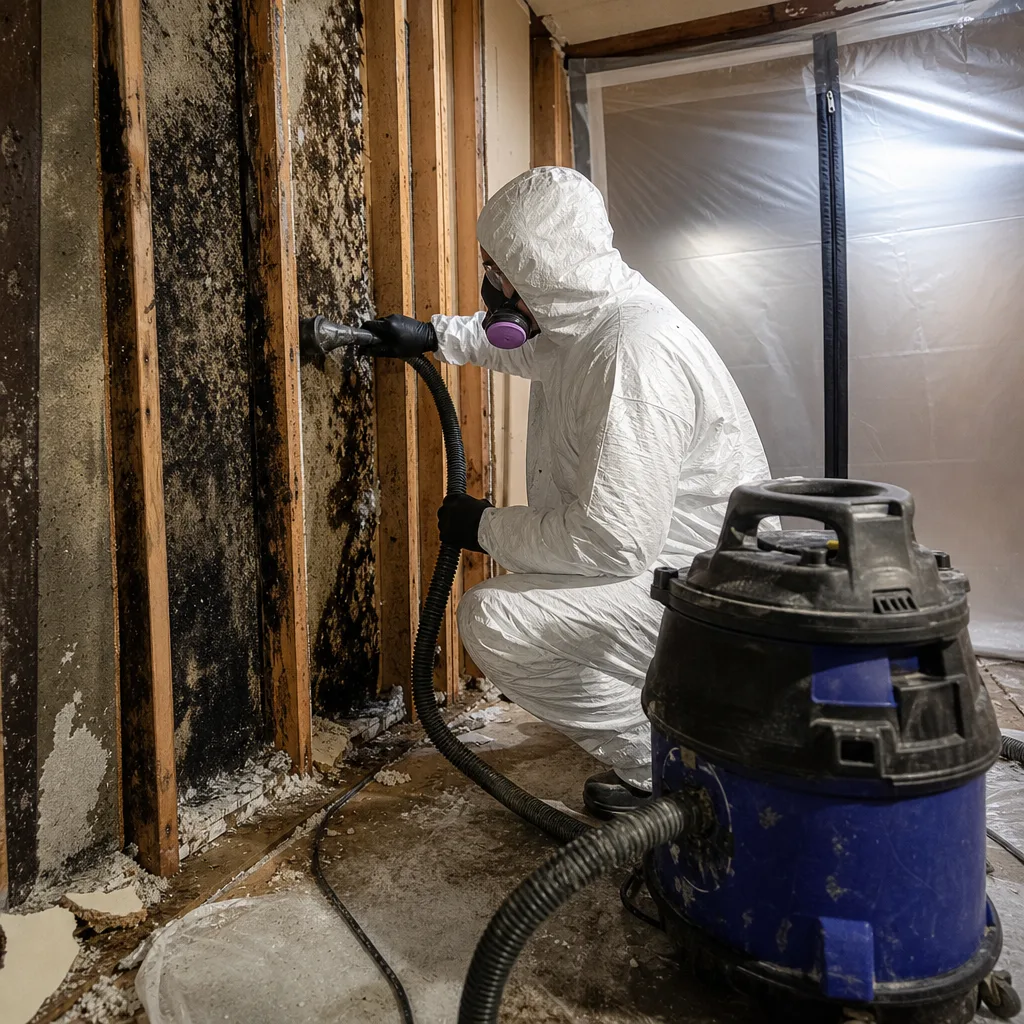
Post-Remediation Verification
After the source is fixed and affected materials are removed or treated, we conduct post-remediation verification with moisture meters and, when specified, air sampling. We document everything and provide a written report you can give to your board, your managing agent, or your insurance adjuster. If clearance levels don’t meet the standard, we keep drying until they do.
What happens when you call
- 1
A real person answersNo phone trees - you reach a local pro.
- 2
You get an upfront price rangeHonest numbers before anyone is dispatched.
- 3
A background-checked tech heads outLicensed & insured, dispatched right away.
- 4
You approve before work beginsNothing starts until you say go.
Professional Mold Removal in Jackson Heights
Professional Mold Removal in Jackson Heights means removing the mold that’s actively growing and correcting the moisture source that let it start. In pre-war plaster and joist construction, that’s often not as simple as cutting out a patch of drywall. Plaster holds moisture differently than gypsum board, and wood joists behind plaster can stay damp long after the surface looks dry. A standard mold removal in a single Jackson Heights unit runs $1,800 to $4,800, with multi-room jobs at higher ranges.
Plaster Wall Cavity Drying
When mold is behind plaster, we often use Injectidry injection drying mats to force dry air directly into wall cavities without tearing out historic plaster. This approach preserves original material where it’s structurally sound and saves you from a full plaster replacement, which in a Jackson Heights co-op often triggers additional board review. If the plaster is damaged beyond saving, we cut it cleanly, treat the framing, and coordinate repair with your approved contractor.
Joist Bay and Subfloor Treatment
Water from a fourth-floor leak rarely stays in one unit. It runs down through joist bays and along plumbing chases, soaking subfloors and ceiling cavities on multiple levels. Our techs trace moisture with non-invasive meters across floors 2, 3, and 4, map the full affected area, and treat every damp joist bay with antimicrobial after structural drying. That’s the difference between fixing the mold you can see and fixing the mold that’s still feeding inside the building’s bones.
Trusted Brands We Service in Jackson Heights
Our trailers carry XPOWER axial fans for high-velocity air movement in tight co-op rooms, B-Air dehumidifiers for low-grain refrigerant drying, and Injectidry mats for plaster cavity and hardwood floor drying. We also run Dri-Eaz air scrubbers and Phoenix drying systems, the same professional-grade equipment commercial restoration crews use in high-rise buildings. For Jackson Heights customers, that means we arrive with the right machine for your building’s age and construction, not whatever was left in the truck. Parts and supplies are stocked locally, so a tripped breaker or a dead fan motor doesn’t cost you a day of drying.
See the difference
 Before
 After
After Before
 After
After Before
 After
AfterCommon Mold Remediation Problems We See in Jackson Heights Homes
- Shared wall moisture from neighboring units: A leak in the apartment above you can saturate your ceiling joists for weeks before you see a stain. By the time visible mold appears, the cavity behind your plaster is already colonized. We map moisture across shared surfaces to find the full extent of the damage, not just the visible patch.
- Board approval shutdowns: Starting demolition before a co-op board’s alteration committee signs off is the fastest way to get a stop-work order and a fine. Our techs carry blank alteration agreement forms for many Jackson Heights buildings and verify approval status with your managing agent before we cut anything.
- Vibration-induced settling cracks along Roosevelt Avenue: Buildings near the elevated 7 train absorb decades of vibration, and that stress shows up as hairline cracks in exterior masonry and interior plaster. Rain enters these cracks, wets the plaster and joists behind them, and feeds mold that keeps coming back after surface cleaning. We identify these cracks as part of the moisture source, not just the symptom.
- Surface-only treatments in garden apartments: Jackson Heights garden apartments often sit on crawl spaces or slab-on-grade foundations with high relative humidity. If a company treats only the visible wall mold and doesn’t address the RH under the floor, the mold returns within months. We test crawl space humidity and install vapor barriers and dehumidification when the number reads above 60% RH.
Pricing for Mold Remediation in Jackson Heights, NY
A mold inspection with moisture mapping in Jackson Heights runs $300 to $600, depending on unit size and whether air sampling is requested. Containment, removal, and structural drying for a typical single-room job in a pre-war co-op runs $1,800 to $4,800. Multi-room remediation involving shared wall cavities, joist bays, and post-remediation verification on a building-wide issue can reach $8,000 to $15,000. The variables are the square footage of affected material, whether plaster can be saved or must be removed, and how many rooms require containment. Every quote we give includes the written scope before work starts, and that number does not change at the door. Call (315) 924-6992 for a free estimate.
We Also Serve Cities Near Jackson Heights
Our local crews work throughout Queens and the surrounding area, including Maspeth, College Point, and New York. If you’re a homeowner or co-op shareholder near Jackson Heights and you’re seeing signs of mold, we can usually get a team to you the same day. Reach us at (315) 924-6992.
Serving Jackson Heights, NY - Our Local Coverage Area
We’re based in the Jackson Heights area and know this community well. Use the map below to see our service coverage - if you’re nearby, we can almost certainly help.
FAQs About Mold Remediation in Jackson Heights
Yes. Most Jackson Heights co-op boards require a written alteration agreement before any demolition, containment, or remediation work begins inside a unit. The specific form varies by building, and many boards also want proof of insurance, a scope of work, and sometimes a post-remediation clearance report. We routinely prepare these paperwork packages for shareholders and managing agents, and our techs carry blank alteration agreements for many buildings in the historic district. If your board is strict about hallway containment or stairwell access, we write the plan to match their rules before work starts. Call (315) 924-6992 and we can walk you through what your building likely requires.
Buildings within a block or two of the elevated 7 line along Roosevelt Avenue absorb constant low-level vibration from passing trains. Over decades, this vibration creates hairline settling cracks in exterior masonry, window lintels, and interior plaster walls. Rain and snowmelt enter these cracks, wetting the plaster and wood joists behind them, and that trapped moisture feeds mold that often doesn’t show on the visible surface. In Jackson Heights, a proper mold assessment needs to include checking these vibration cracks as potential water entry points, not just looking for plumbing leaks. Our moisture mapping catches these hidden sources before we treat the mold itself.
Category 1 water damage, which comes from clean sources like broken supply lines, is the more common initial event in Jackson Heights pre-war co-ops. That’s because the original cast-iron and galvanized plumbing in 1920s and 1930s buildings is well past its expected service life. But here’s the catch: a Category 1 leak that sits unnoticed for days or weeks inside a plaster wall cavity becomes Category 2 water damage as it picks up contaminants from building materials, dust, and old insulation. That’s why we treat every hidden leak as potentially contaminated, and why antimicrobial treatment is standard after structural drying in these buildings.
Sometimes, yes. If the plaster is structurally sound and the mold is limited to the back surface inside a wall cavity, we can use Injectidry injection drying mats to push dry air directly into the cavity and treat the affected area with antimicrobial through small access points. This preserves original plaster, which matters in Jackson Heights because full plaster replacement in a historic district co-op often triggers additional board review and higher restoration costs. If the plaster is crumbled, waterlogged, or the mold has penetrated through to the visible surface, removal and replacement is the honest answer. We’ll tell you which path applies to your walls and put the cost in writing before work begins. Call (315) 924-6992 for an assessment.
Freeze-thaw pipe bursts in uninsulated exterior wall cavities are the biggest hidden winter moisture risk in Jackson Heights garden apartments. These lower-profile buildings often have supply pipes running through exterior walls with minimal insulation, and a hard freeze can split a galvanized or copper line behind a kitchen cabinet where nobody sees it until the wall is soaked. Because garden apartments sit close to grade, the water wicks into floor framing and crawl spaces, creating mold conditions that surface weeks later as a musty smell. If you notice a cold-season water bill spike or a damp smell near an exterior wall, call (315) 924-6992 for a moisture inspection before visible mold appears.
Written by Carl Brandt, Owner at Dryden Restoration New York, serving Jackson Heights and the surrounding Queens area.